Des Moines metro
Two watering bans
in two summers.
Whole-home filtration, softeners and reverse osmosis across central Iowa. I start with what your utility already publishes, test at your tap, then quote whatever the reading calls for and nothing else.
The test is free, and it is the whole pitch. If your water does not need a system, I will tell you that.
33
of 43 days, both source rivers measured
over the federal nitrate limit
Do you need water treatment in Des Moines?
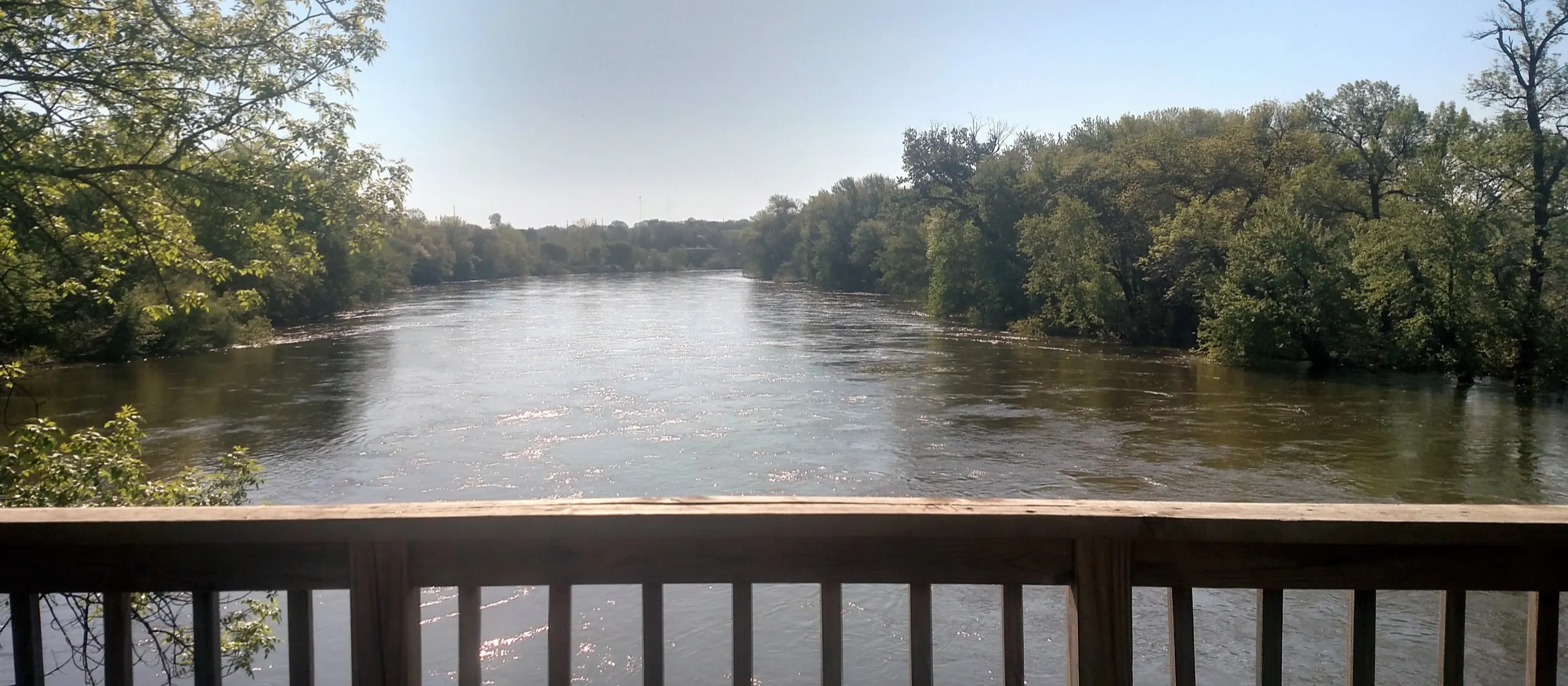
Central Iowa tap water meets federal safety standards when it leaves the treatment plant. It also shows up at your house carrying two things municipal treatment was never built to fix for you. Hardness of roughly 7 to 9 grains per gallon, which scales fixtures, clouds your glassware and takes years off a water heater. And seasonal nitrate out of the Raccoon and Des Moines rivers, which pushed Central Iowa Water Works into running its nitrate removal facility starting in January 2026 and into two mandatory watering bans in two consecutive summers.
A whole-home filter treats everything coming into the house. A softener handles hardness. An RO unit under the kitchen sink cuts nitrate and dissolved solids in what you drink. Which of those three you need comes down to your utility and your own test result.
Plenty of metro homes need one system, not three, and some need nothing at all. I would rather tell you that during a free test than sell you a package you did not need in the first place.
Three systems, and the problem each one solves
Whole-home filtration
Carbon at the main line, so every tap and shower and appliance gets it. Good for chlorine taste, odor, sediment. It does nothing for hardness and nothing for nitrate, and anybody who tells you different is selling.
HardnessWater softeners
Ion exchange, sized off your grains per gallon and how many people live in the house. Central Iowa runs around 7 to 9 gpg. That is what scales up your water heater and kills a dishwasher early.
Point of useReverse osmosis
Under the kitchen sink, for what you drink and cook with. Remineralization if you want it. For nitrate in a house, this is the method that works.
The local problemNitrate reduction
Two mandatory watering bans in two summers, and a treatment facility that ran in January. What the 10 mg/L limit is, and what moves the number inside a house.
Who treats your water, by city
Central Iowa Water Works became the region's wholesale water authority on 1 January 2025. Twelve founding members, more than 600,000 Iowans. Your local utility still owns your distribution lines, your rates and your customer service, which is why the water quality answer changes depending on which side of the metro you live on.
12 founding members 600,000 Iowans served

| Member | Water utility | Role in CIWW | In the June 2026 ban |
|---|---|---|---|
| Des Moines | Des Moines Water Works | Water producer | Yes |
| West Des Moines | West Des Moines Water Works | Water producer | Yes |
| Ankeny | City of Ankeny | Member | Yes |
| Urbandale | Urbandale Water Utility | Member | Yes |
| Waukee | City of Waukee | Member | Yes |
| Johnston | City of Johnston | Member | Yes |
| Clive | City of Clive | Member | Yes |
| Norwalk | City of Norwalk | Member | Yes |
| Polk City | City of Polk City | Water producer | Yes |
| Grimes | City of Grimes | Water producer | Not named |
| Warren Water District | Warren Water District | Member | Yes |
| Xenia Rural Water District | Xenia Rural Water District | Member | In part |
The Stage 3 announcement named Ankeny, Clive, Johnston, Norwalk, Polk City and Waukee, plus customers of Des Moines Water Works, Urbandale Water Utility, West Des Moines Water Works, Warren Water District and parts of Xenia Rural Water District. Grimes is a founding member and a water producer, and it was not on that list. For your own hardness and nitrate numbers, pull your utility's annual Consumer Confidence Report, or let me test at your tap.
Why central Iowa nitrate keeps making the news

-
Twelve utilities become one wholesale authority
Central Iowa Water Works goes operational. Twelve founding members, more than 600,000 Iowans on the system.
-
The region's first lawn watering ban
River nitrate forces a mandatory ban. Before it could come off, officials said at least one source had to measure 10 mg/L or lower.
-
Nitrate removal runs in January, first time since 2015
The facility at the Fleur Drive plant comes online in the first week of January. By 1 May it had logged 107 days.
-
Maffitt Reservoir sits 5.5 feet low
The utility holds a press conference asking people to go easy on irrigation. Maffitt is an emergency source, and executive director Tami Madsen puts it 5.5 feet under where it should be.
-
A Stage 2 alert asks for a 50 percent cut
Voluntary, not mandatory. Reporting the next day put the Raccoon at 17.17 mg/L and the Des Moines at 10.4.
-
The second ban, twelve days later
The board enacts Stage 3. Summer lawn watering runs about 40 percent of the system's drinking water supply, per Madsen.
None of that means your tap water is unsafe. It means the margin is thin, the cause is upstream and seasonal, and the people who treat your water have said so out loud twice in two years. Treating at the tap puts that margin back under your own roof.
What working with us looks like
Free water test at your kitchen tap
We measure hardness, chlorine, nitrate and total dissolved solids. Then we put your utility's published figures next to what we got, so you can see both numbers and not just ours.
A written quote for whatever the test found
One page, fixed price. No financing pitch, and no discount that expires the second we walk out the door. If the test says all you need is a softener, a softener is what you get quoted.
Installation by a licensed Iowa plumbing contractor
Most whole-home and reverse osmosis jobs wrap up in one visit, permits pulled where the city wants them.
Walkthrough, and the real yearly cost
We show you the bypass and the filter intervals, and what the consumables run per year. You hear that part before you own the thing, not after.
Where we work
We install across the Des Moines metro and out into the surrounding Polk, Dallas and Warren county communities. Each page lists the utility that serves that city.
Common questions
Is Des Moines tap water safe to drink?
Yes. Water delivered by Central Iowa Water Works member utilities is treated to meet federal Safe Drinking Water Act standards, nitrate included, and the utility says so publicly every time this comes up. The reason it keeps making news is that staying under the limit has gotten expensive and difficult. They ran a dedicated nitrate removal facility starting 6 January 2026, which had not happened in January since 2015, and they ordered mandatory watering bans in June 2025 and again in June 2026. Safe when it leaves the plant and ideal at your kitchen tap are two different bars. Home treatment is about the second one.
How hard is the water in the Des Moines metro?
Published figures for central Iowa generally land between 7 and 9 grains per gallon, which is hard water by any classification. The City of Waukee puts an average of 7.5 to 8.5 grains per gallon on its own water quality page, which is the figure I would start from if you are out that direction. Your real number depends on which utility serves you and what time of year it is, so I would test it instead of assuming.
Will a water softener remove nitrate?
No. A standard ion exchange softener pulls calcium and magnesium, which is hardness, and it does not meaningfully touch nitrate. Reverse osmosis is the household method for nitrate in drinking and cooking water. If a quote treats a softener as your nitrate fix, that quote has two unrelated problems stapled together.
Do I need a whole-home system or just one at the sink?
Depends which problem you are solving. Hardness hits every fixture and every appliance, so you treat it where the water comes into the house. Nitrate and dissolved solids matter most in what goes in a glass, so you treat those at the tap. Plenty of metro homes end up with a softener and an under-sink RO unit and no whole-home carbon filter at all, and they are fine.
What does water filtration cost in Des Moines?
A typical whole-home install in this market runs in the low thousands. An under-sink reverse osmosis system is a fraction of that. The spread is wide because sizing depends on your hardness, your household size and what your plumbing looks like, so I am not going to pretend there is one price. We quote a fixed number in writing after the test, and we do not run expiring same-day pricing.
Who actually performs the installation?
Licensed Iowa plumbing contractors. Plumbing work in Iowa falls under the Plumbing and Mechanical Systems Board, and a plumbing contractor has to hold a master license or employ a licensed master plumber as its master of record. Permits get pulled where the municipality requires them.
Get the reading first
I test your water, show you your utility's published figures beside the result, and tell you plainly whether you need anything at all.